BATCH CHROMATOGRAPHY

Contichrom® CUBE. Built for Batch and Continuous Chromatography

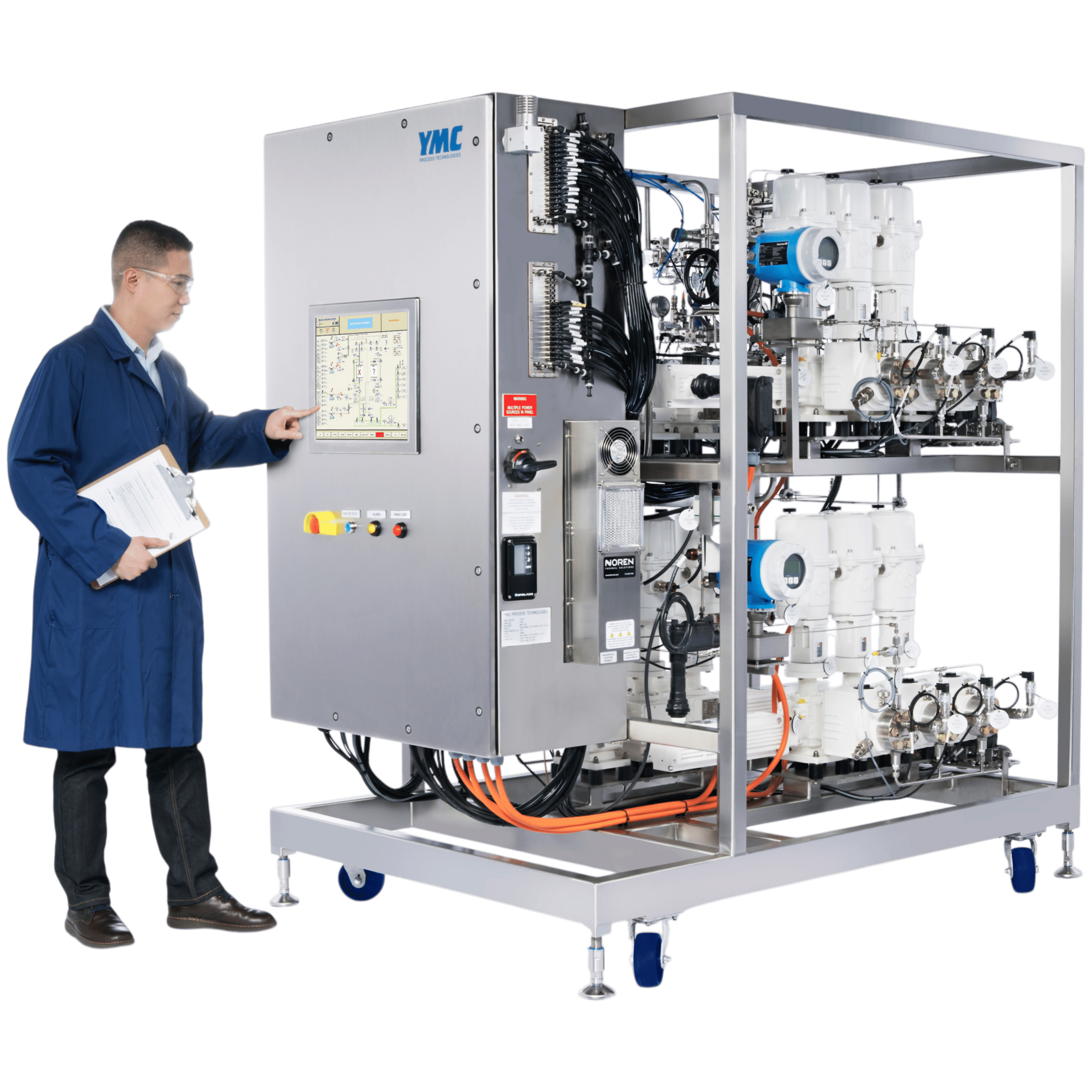
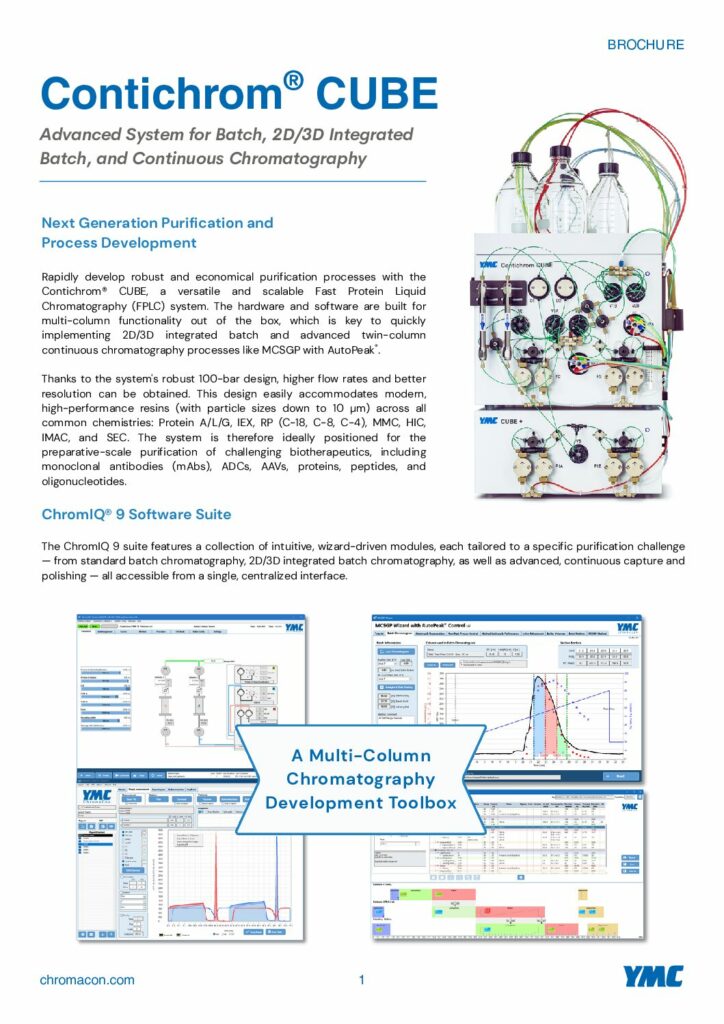
Ready to use out of the box. Four pumps and twin-column architecture in a single bench-top system. Run high-pressure batch chromatography today — and switch to MCSGP, CaptureSMB®, or N-Rich® on the same hardware whenever you’re ready. No second system. No method redevelopment.

Why Run Single-Column Batch on a Contichrom® CUBE?

If the system is designed for twin-column continuous chromatography, why choose it for running in single-column batch mode? Because the same engineering that enables CaptureSMB® and MCSGP also makes the CUBE a genuinely better batch platform — before you ever consider continuous operation.

– Out-of-the-box functionality. Four high-precision pumps, twin-column architecture, and 18 inlets are part of the base hardware. Most batch workflows run with no add-ons; advanced multi-step configurations have a clear upgrade path.

– One platform, many modes. Single-column, alternating-batch, and 2D/3D integrated batch all run on the same 100 bar hardware — supporting Protein A/L/G, IMAC, IEX, RP, Mixed-Mode, HIC, and SEC — isocratic or gradient.

– Continuous-ready from day one. Every batch run becomes the starting point for MCSGP, N-Rich®, or CaptureSMB® — same hardware, same columns, same software. No second system. No method redevelopment.

– Advanced method design. We make even the most challenging method designs easy to implement with ChromaCraft™, our batch & 2D/3D integrated batch method design module.


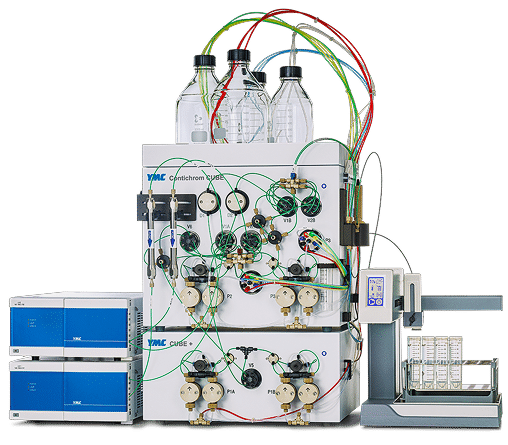
A twin-column, four-pump architecture — not a retrofit.

The CUBE was engineered from day one as a twin-column platform — every component on the front face was designed to support continuous chromatography natively, not bolted onto a single-column system after the fact.

Pump architecture

  • Four independent high-precision pumps as base hardware — no upgrade path required
  • Binary gradient pair (P1A + P1B) for elution
  • Two isocratic pumps (P2, P3) for loading, wash, and re-equilibration — running simultaneously with the gradient

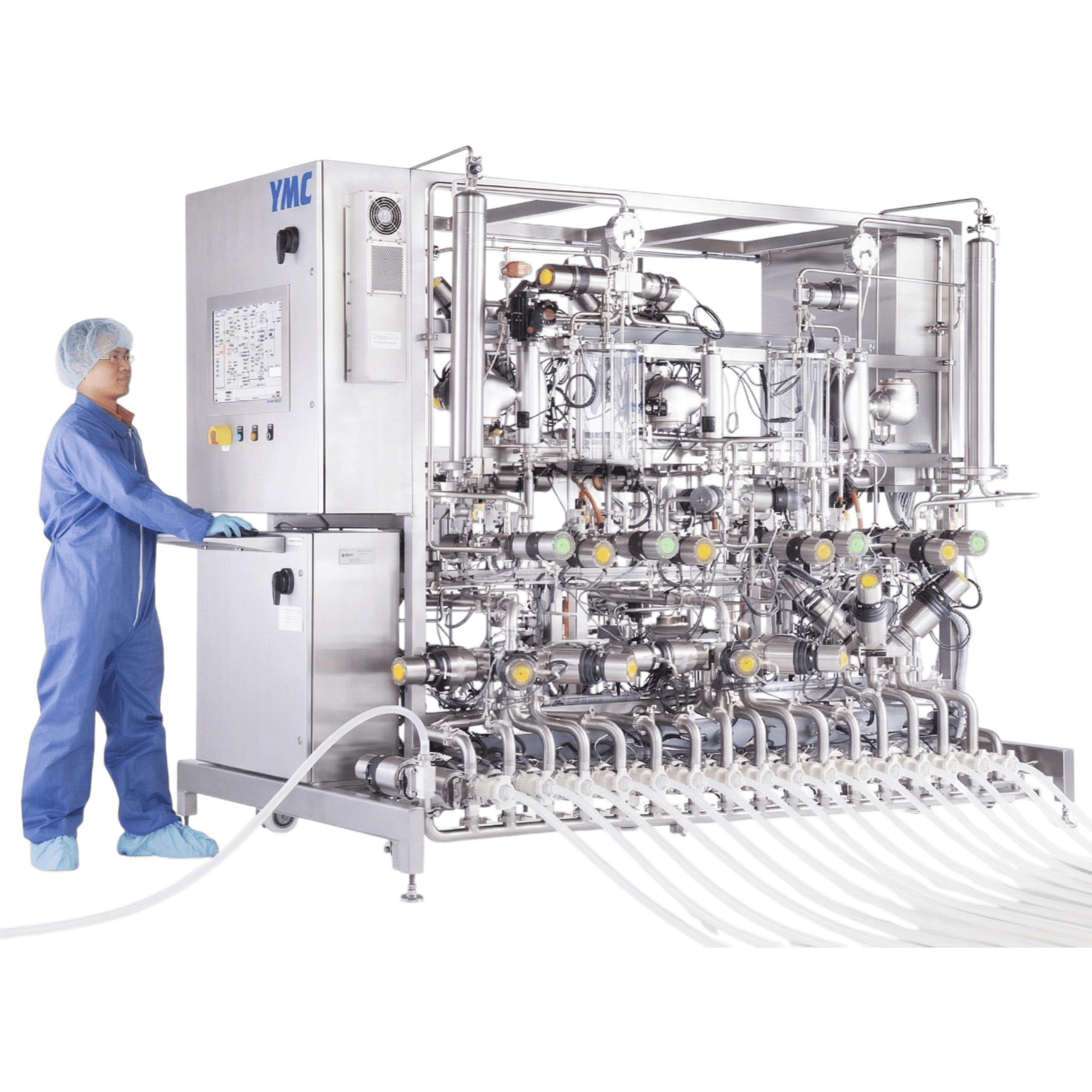
Inlet flexibility

  • 8-port buffer selection valves on each isocratic pump
  • 18 inlets across the system, expandable to 32
  • Wash buffers, eluents, regeneration solutions, and feed lines stay connected simultaneously — scout conditions, screen columns, or compare buffer compositions without replumbing

Detection

  • Dual UV detectors (200–600 nm, 4-channel) and conductivity sensors integrated directly behind each column
  • Real-time signal from each column captured independently — essential for twin-column tracking, equally useful in batch for monitoring breakthrough, peak elution, and gradient response without external add-on detectors

Column and valve handling

  • Four column selection valves and a dedicated inter-column valve network — part of the base hardware, not optional

Single-column, alternating, and multi-step batch — one platform

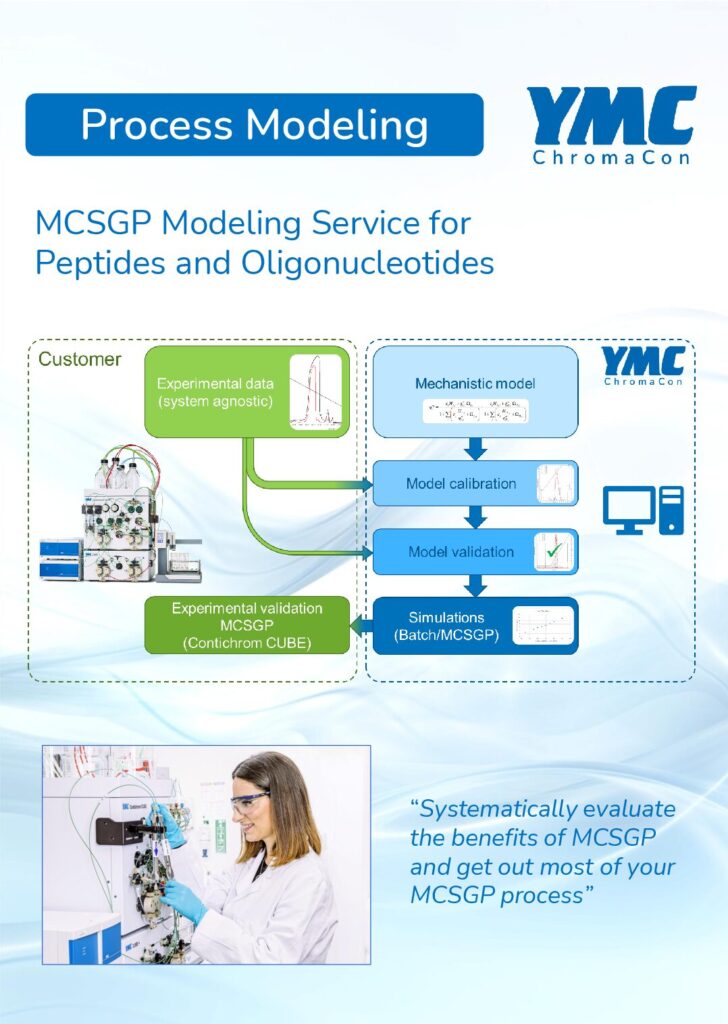
ChromaCraft™, our purpose built method design software, supports multiple batch mode configurations from the same hardware. Single-column batch (left or right position) covers everyday method development and purification. Alternating batch cycles two columns in parallel — doubling equipment utilisation with no added programming, no extra hardware. 2D/3D integrated batch links two or three sequential steps (e.g. Protein A → IEX → desalting) into a single automated run with in-line dilution — eliminating hold tanks and manual handling. Accessory valve kits are recommended for 2D/3D, and once installed, ChromaCraft™ makes multi-step method creation remarkably intuitive: same Gantt chart, set your transfer triggers, one-click generation. For fine-tuning or unusual process scenarios, the Expert Mode editor provides full timetable-level access to every hardware command.

Your single-column batch data is the starting point for everything else

Every continuous process on the platform — CaptureSMB®, MCSGP, N-Rich® — begins from a batch run on the CUBE. The MCSGP and N-Rich® wizards load your batch chromatogram directly from ChromIQ® and let you define product and recycle zones by drag-and-drop. The CaptureSMB® wizard works from breakthrough curve data. Either way, the batch run you do today is never wasted — it is the direct input to the continuous method when you are ready. That upgrade happens on the same hardware, with the same columns, the same resins, and the same ChromIQ® software. No second system, no method redevelopment.

Single-Column Breakthrough Curve for CaptureSMB® Design

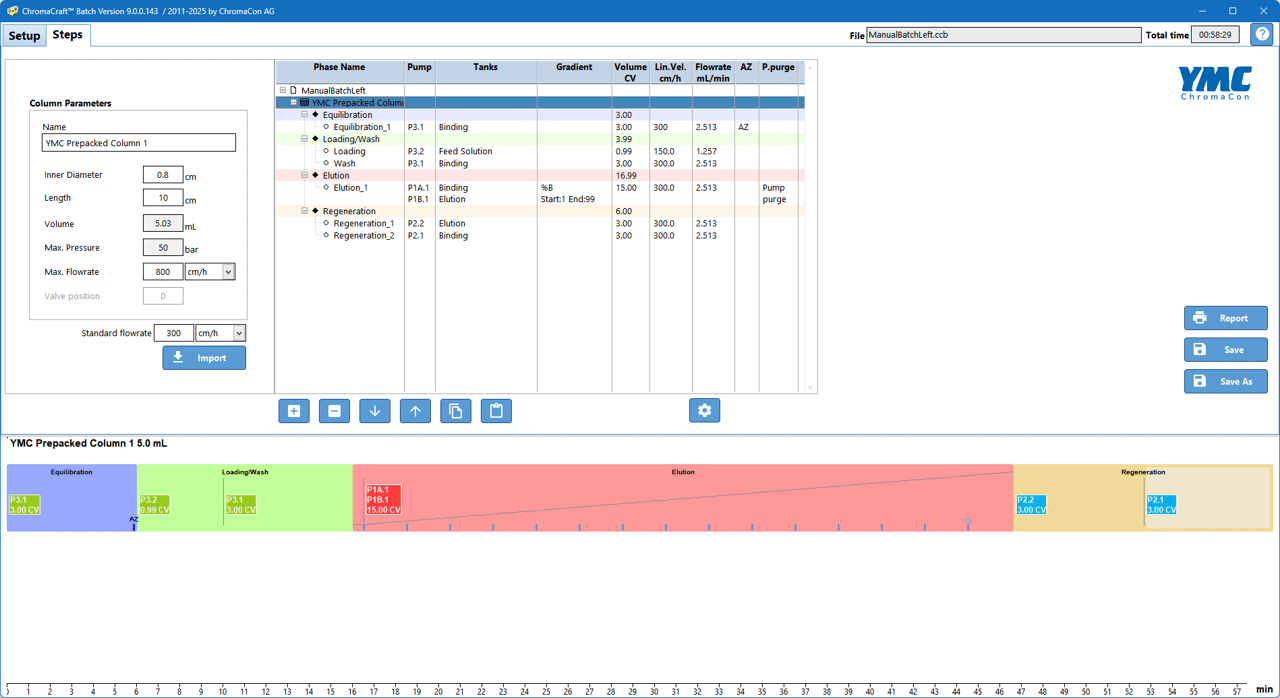
Method Design with ChromaCraft™ — Under Ten Minutes

Overview — Visual editor, no complex programming

Batch methods are built in ChromaCraft™, the dedicated batch editor in ChromIQ® 9. Every step is entered through a structured interface — no scripting, no timetable coding. A colour-coded Gantt chart runs alongside the Method Table at all times, giving an instant visual read of the complete method structure. A simple method goes from blank screen to ready-to-run in under ten minutes.

Step 1 — Choose process mode and assign buffers

Select single-column, alternating, 2D integrated, or 3D mode. Enter your buffers in the Tank List and assign them to the CUBE’s pump inlets — ChromaCraft™ uses these assignments to manage all valve switching automatically throughout the run. For multi-column methods, these are quickly constructed by combining pre-existing single-column ChromaCraft™ methods, carrying all column parameters and step timings across without re-entry.

Step 2 — Build method steps in the Method Table

Enter each method step — equilibration, load, wash, elution, re-equilibration — setting flow rates, volumes, and gradient profiles. The Gantt chart is derived from the Method Table and updates instantly with every change, making scheduling conflicts and phase overlaps visible before the method is generated.

Step 3 — Set fractionation triggers and generate

Define fraction collection by UV threshold, volume, time, or any combination. ChromaCraft™ auto-generates the complete ChromIQ® method as a single ready-to-run file. For processes that need line-by-line control beyond what the wizard offers, Expert Mode provides full timetable-based access to every hardware command and conditional logic step.

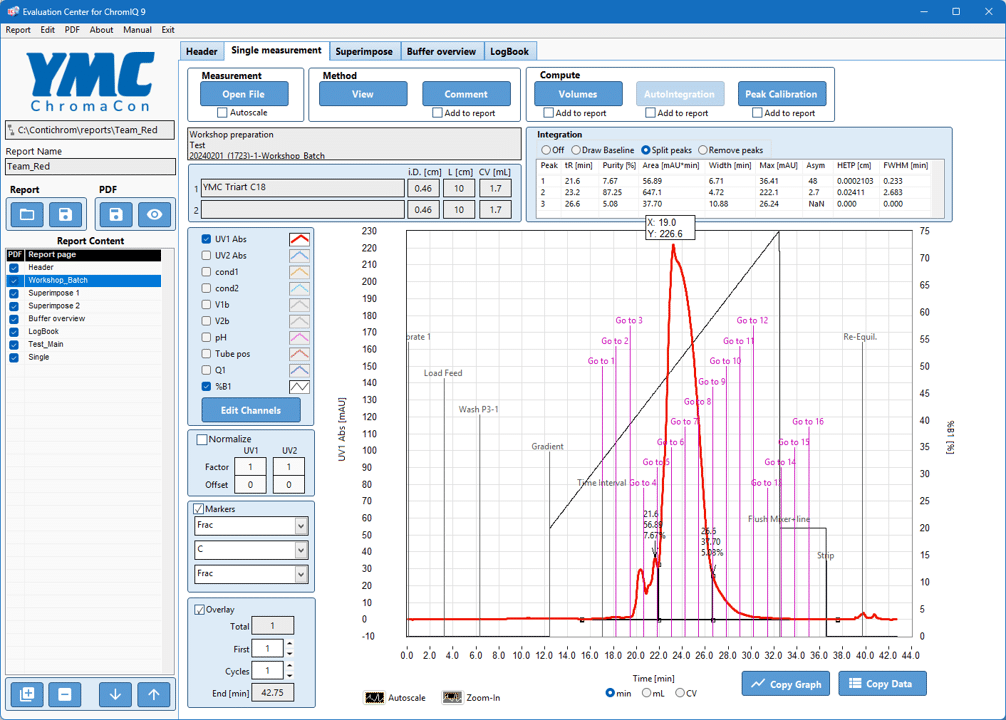
Analysing Results: The Evaluation Center

Every run is logged and available in the Evaluation Center — ChromIQ®’s integrated data analysis module — immediately after it finishes.

  • Peak integration — manual integration with configurable baselines and windows; the Auto Integration tool is reserved for continuous process runs (CaptureSMB®, MCSGP, N-Rich®)
  • Fraction analysis — fractions mapped against the UV trace; assess purity and yield distribution
  • Run comparison (Superimpose) — overlay chromatograms from multiple separate run files in a single view; useful for resin lot comparison, condition screening, or validating column-to-column reproducibility
  • Peak Calibration — scale UV signal to absolute concentration using a known solute mass from offline analytics; eliminates the need for separate mass balance tools
  • PDF report export — structured report including chromatogram, integration table, and run parameters
  • Excel / CSV export — raw signal data and integration results for lab records or regulatory submissions

The ChromIQ® logbook records every system event and user action in an unalterable audit trail. Multi-level user rights management and data integrity checksums are built in as standard.

ChromIQ 9 – Evaluation Center

Contichrom® Platform Advantages at a Glance

Advantage What it means in practice
100-bar pressure rating Modern, small-particle resins at higher flow rates — better resolution, faster cycles
Four independent pumps Complex multi-buffer gradients and re-equilibration run simultaneously
Automated fraction collection UV-triggered diverter valve — product, side fractions, and waste collected hands-free
Real-time multi-sensor monitoring Dual UV Detectors (200–600 nm, 4-channel), conductivity, and pH
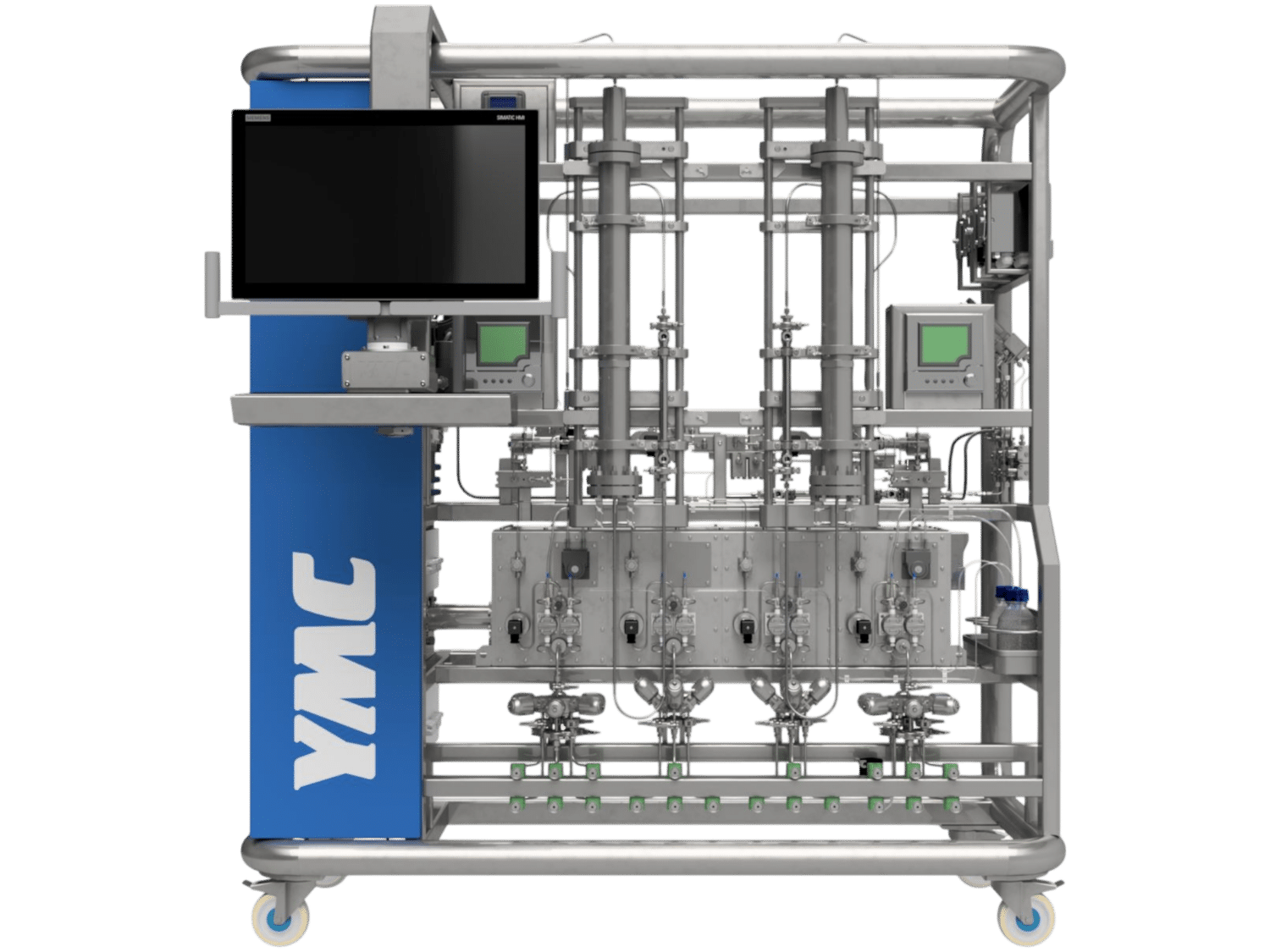
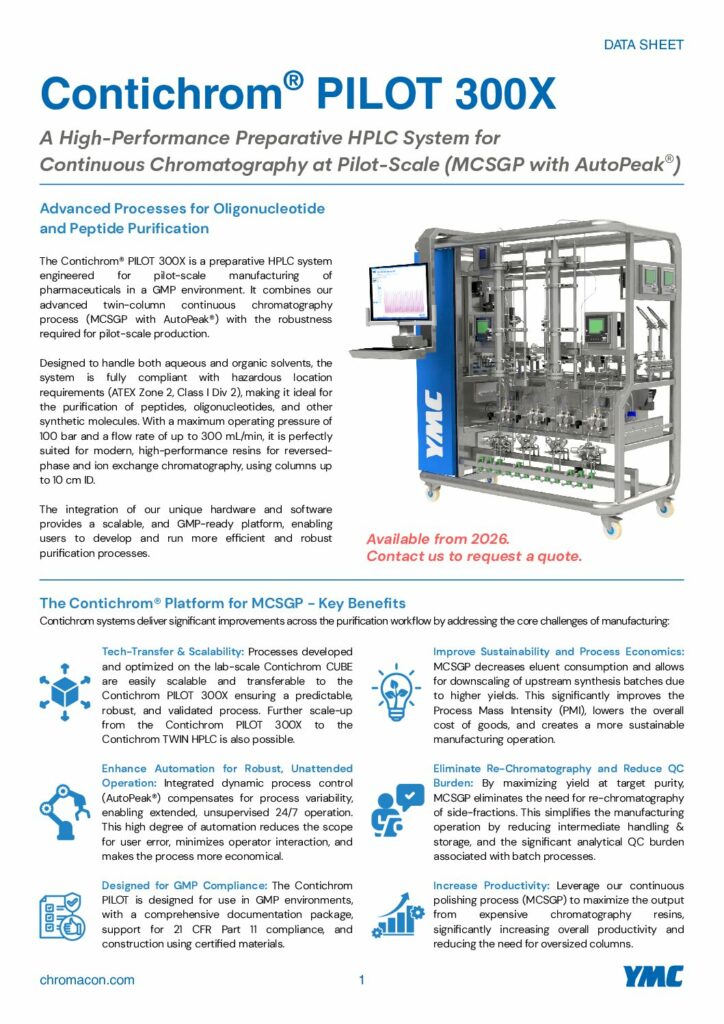
Direct scale-up path Methods transfer to the Contichrom® PILOT 300X and TWIN production systems
Continuous-ready from day one The batch chromatogram is the direct input to the MCSGP and N-Rich® wizards; CaptureSMB® uses breakthrough curve data from the CUBE — every continuous process starts from a batch reference run


Batch Applications

Molecule class Typical batch use
Monoclonal antibodies (mAbs) Protein A capture; IEX polishing; SEC/desalting — standalone steps or reference runs before CaptureSMB® or MCSGP®
ADCs Protein A capture; HIC for DAR fractionation; IEX polishing
Recombinant proteins / hormones His-Tag IMAC or Protein L/G affinity capture; IEX polishing; SEC
Peptides RP (C18/C8/C4) gradient polishing — batch reference before MCSGP or N-Rich
Oligonucleotides AEX gradient purification — batch reference before MCSGP or N-Rich
AAV / gene therapy Affinity capture; IEX polishing
mRNA / LNP Affinity and IEX steps at appropriate scale
Nutraceuticals / small molecules RP or mixed-mode preparative purification


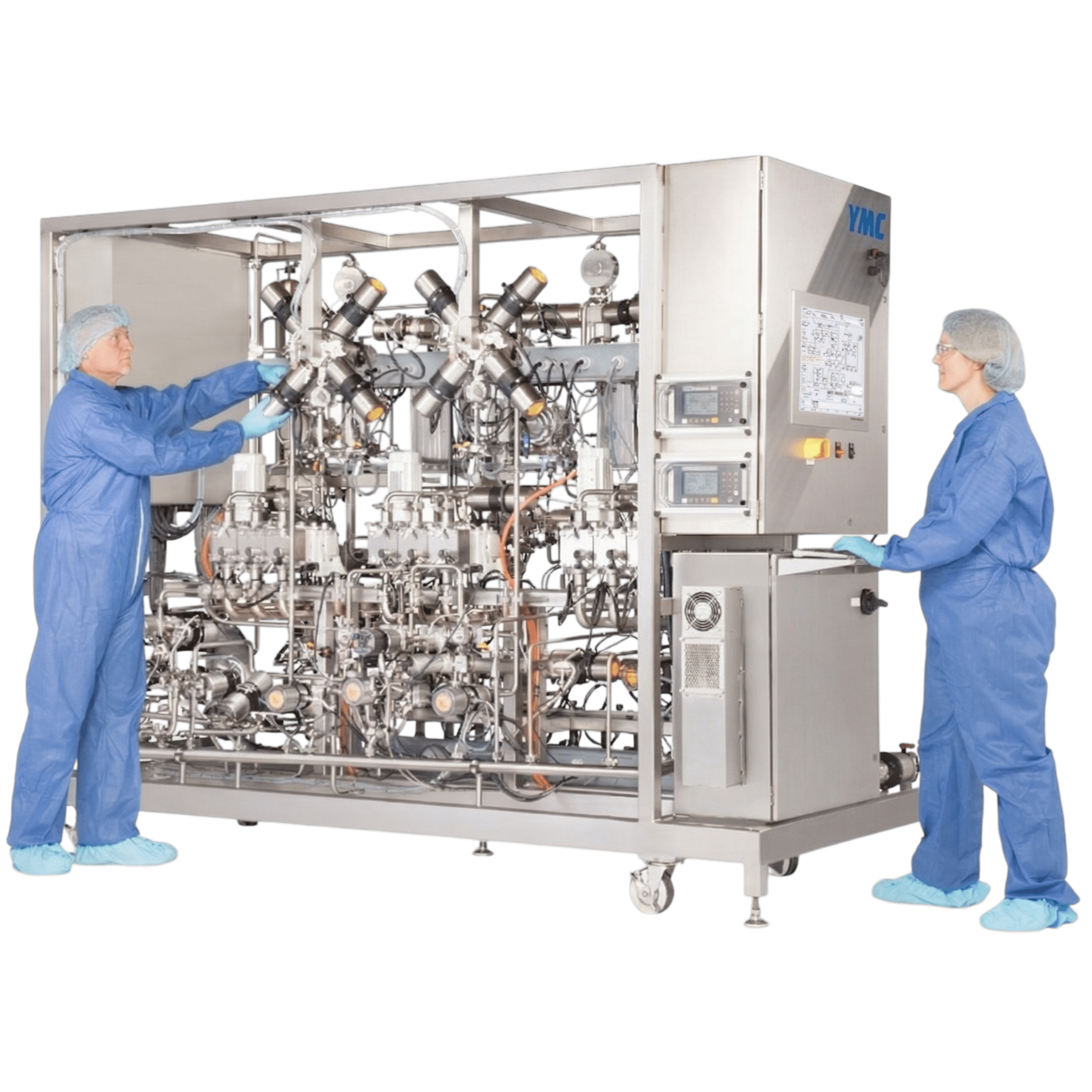
Contichrom® Systems for Batch and Continuous Chromatography

All Contichrom® Systems Perform Batch Chromatography in Addition to Continuous Chromatography, With Predictable Scalability from CUBE to PILOT and TWIN System Lines.

Start with Batch. Scale Wherever You Need To.

Frequently Asked Questions

Unlock This Resource

Fill in your details to receive the full content straight to your inbox.