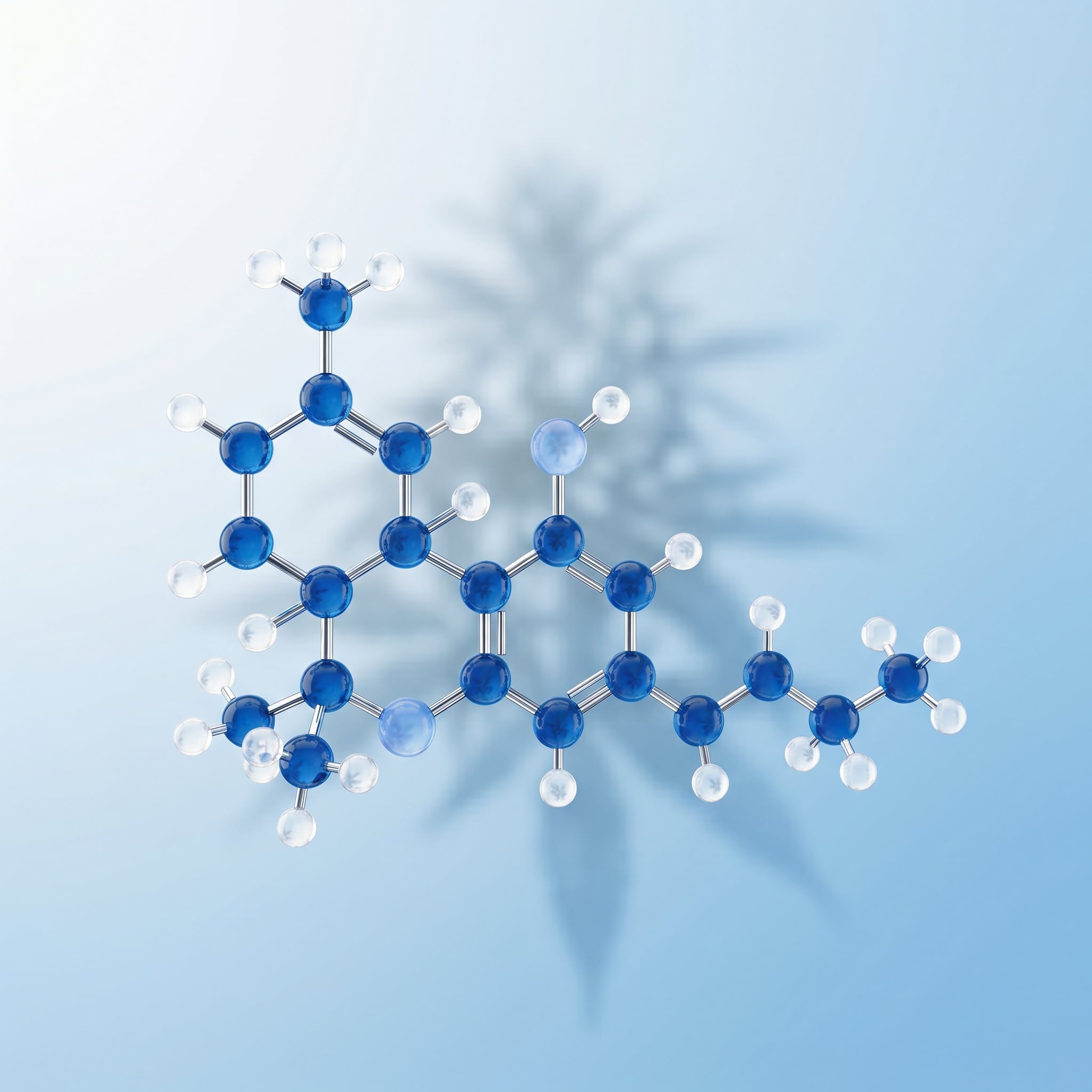
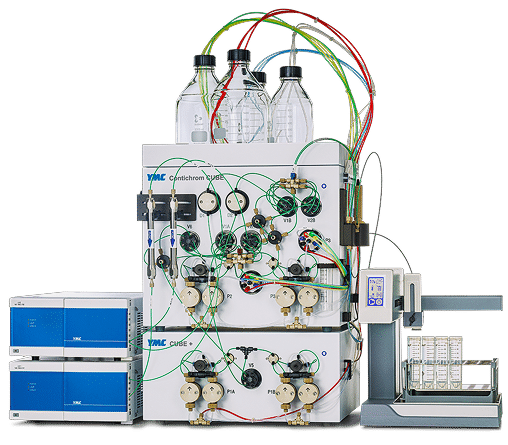
Molecule: Eicosapentaenoic acid ethyl ester (EPA-EE) from generic fish oil; DHA-EE as principal co-eluting impurity. Feed purity: 74% EPA-EE. Target: >97% EPA-EE purity. Equipment: Contichrom CUBE Mode: RP-HPLC (5 MCSGP cycles)
| Parameter |
Batch RP-HPLC |
MCSGP |
| Yield (at >97% EPA-EE purity) |
Baseline |
+250% |
| Productivity |
Baseline |
+590% (>6× throughput per column volume per hour) |
| Solvent consumption |
Baseline |
−75% |
Key finding: The near-identical RP-HPLC retention of EPA-EE and DHA-EE (both 20-carbon omega-3 fatty acids differing only in degree of unsaturation) makes this a separation where batch chromatography forces extreme center-cuts. MCSGP’s internal recycling unlocks this challenging separation: five cycles delivered +250% yield, +590% productivity, and 75% less solvent — from the same columns and mobile phases used in batch.
ChromaCon/Knauer EPA-EE Purification from Fish Oil with MCSGP. Application note data (2013), Currently unavailable for download.