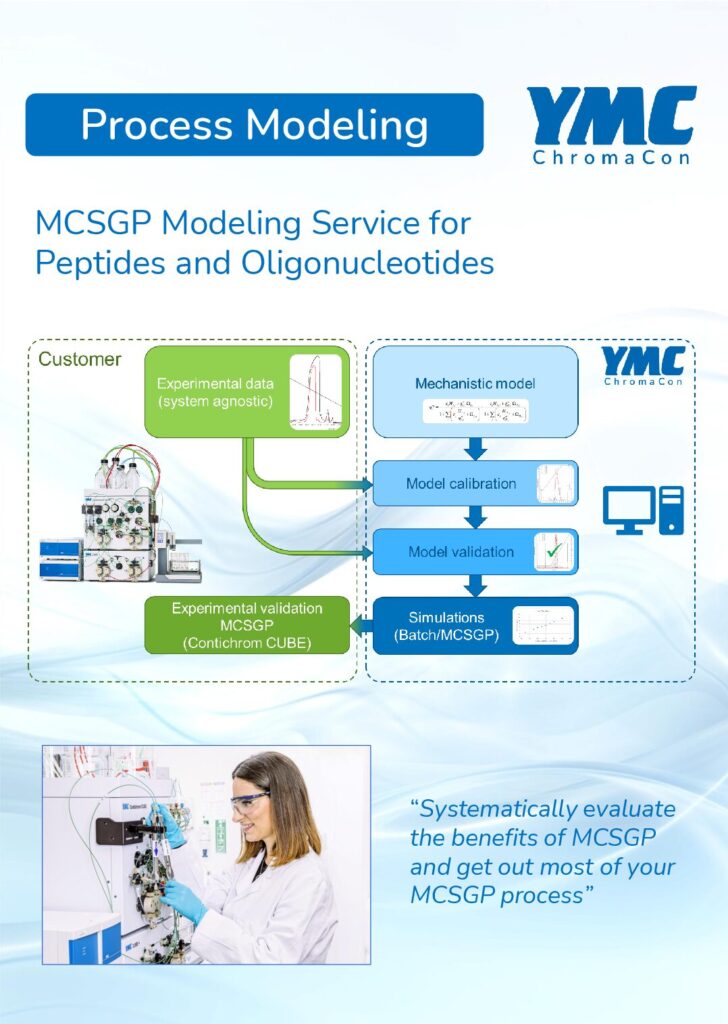
MCSGP Modeling Service for Peptides and Oligonucleotides
ChromaCon’s modeling services support and accelerate MCSGP process design and scale-up of oligo and peptide purifications
Small Molecule Purification
Higher yield, no re-chromatography. MCSGP continuous polishing for cannabinoids, omega-3 fatty acids, steviol glycosides, flavonoids, and beyond — same RP-HPLC chemistry, same C18 columns, same solvents you already use. │ 52% → 94% CBD yield at ≤100 ppm THC │ 7.5× Productivity at equivalent purity │ –30% Solvent consumption
Source: YMC ChromaCon Application Note (CBD purification from hemp extract, RP-HPLC)
Demand for high-purity nutraceutical actives — pharmaceutical-grade CBD, ultra-pure EPA from fish oil, high-intensity sweeteners, botanical polyphenols — is growing rapidly. Chromatographic polishing is typically the final and most critical purification step. It must deliver both high purity and high yield from complex, variable natural extract feeds.
Conventional batch RP-HPLC forces an impossible choice: hit purity specifications or recover maximum yield — not both. Natural extracts contain structurally similar co-eluting compounds (e.g., CBD with THC, EPA with DHA, Rebaudioside A with other steviol glycosides) that form the very impurity profile a center-cut must navigate. Narrow cuts achieve purity but sacrifice yield; wide cuts maximize recovery but fail purity specifications.
The result: low-yield batch runs, costly re-chromatography, high solvent consumption, and excessive QC testing — all compressing margins in an already cost-sensitive market.
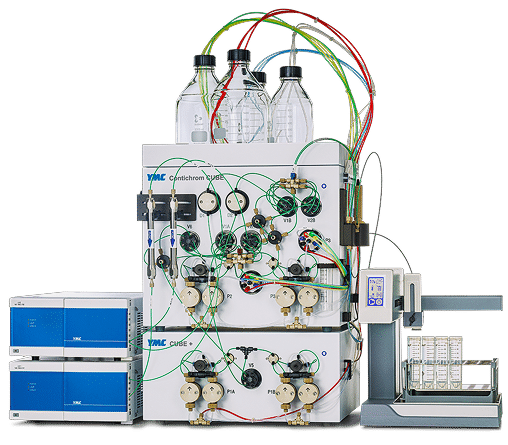
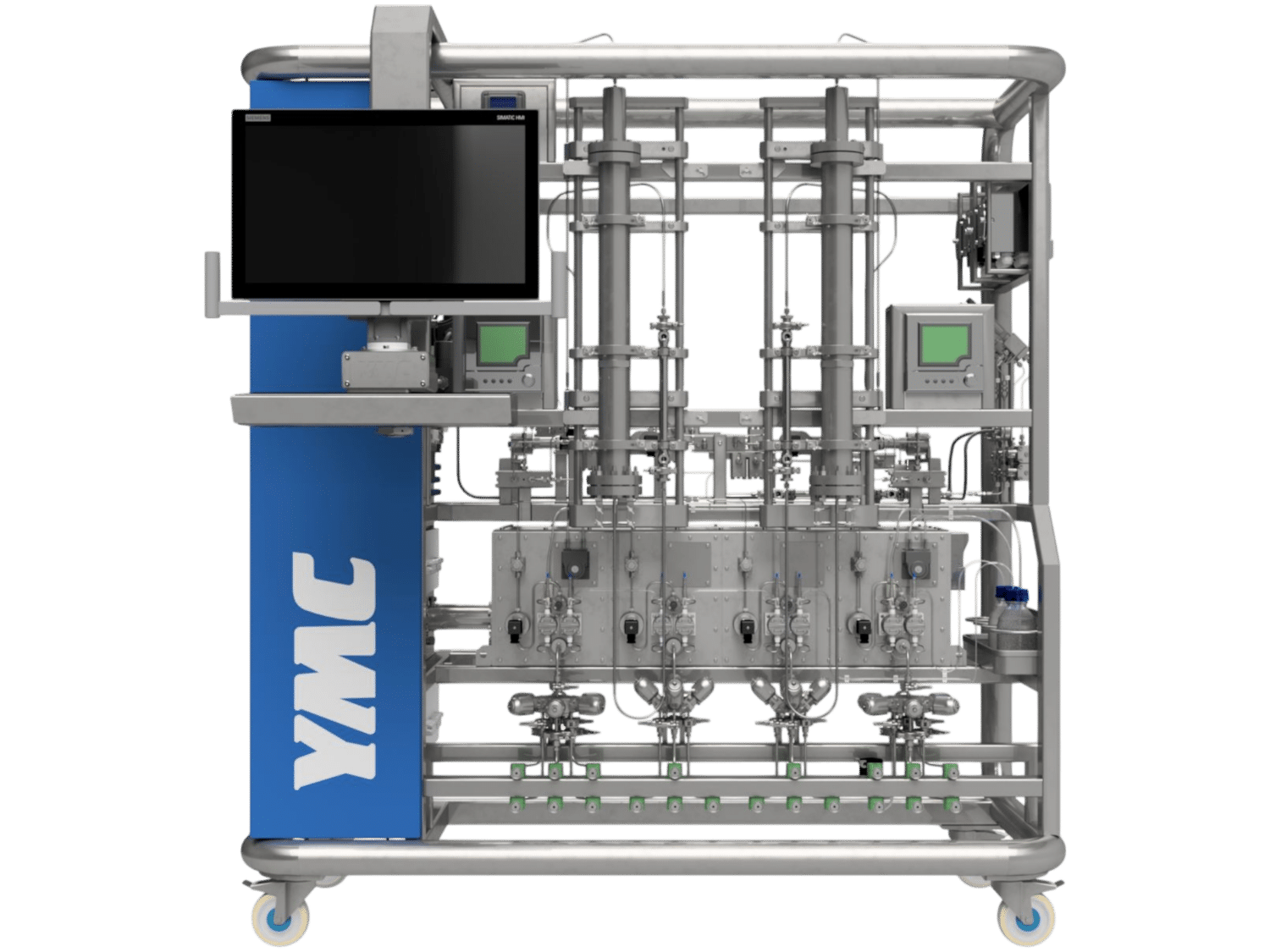
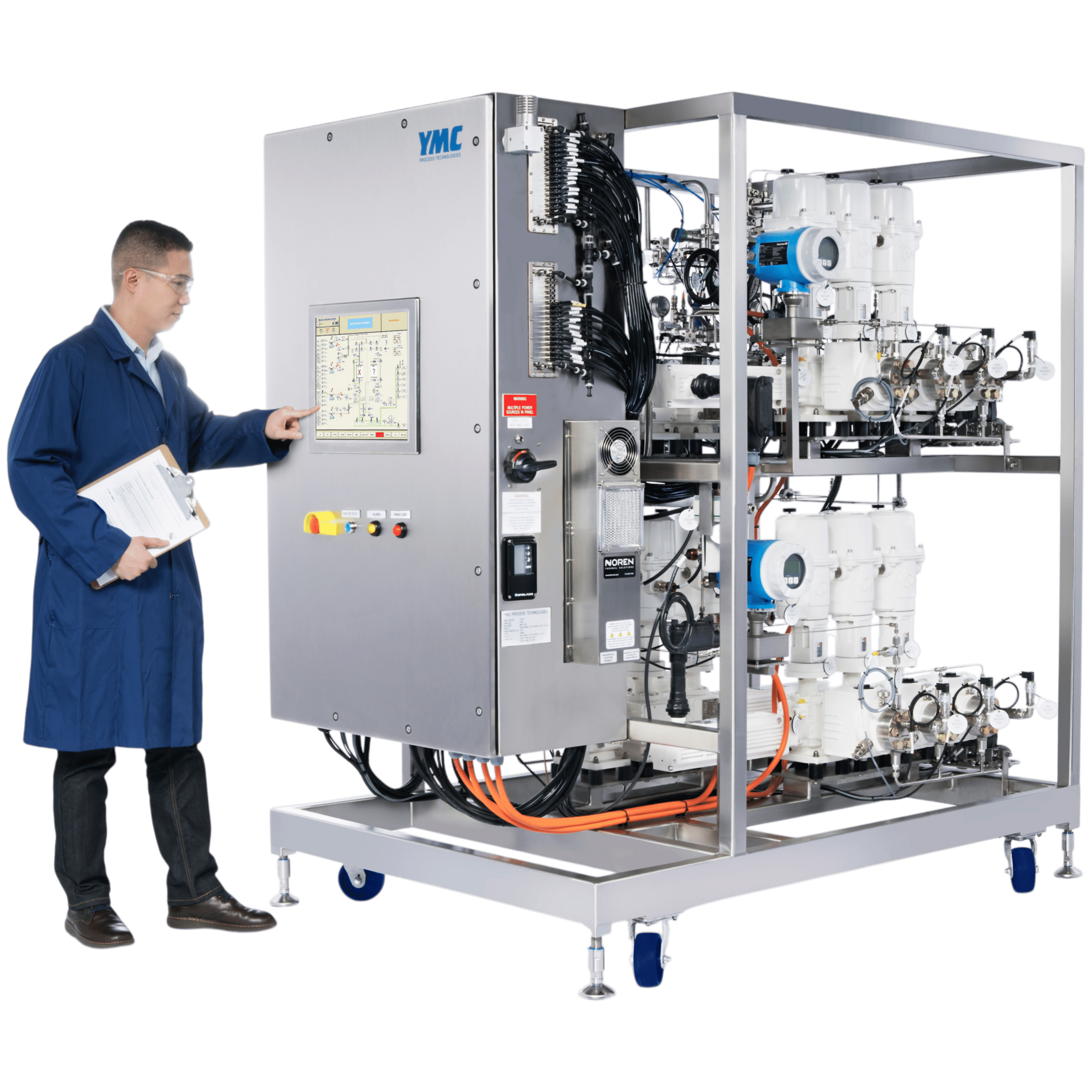
MCSGP (Multi-column Countercurrent Solvent Gradient Purification) eliminates the purity-yield trade-off in small molecule and nutraceutical chromatography. Two identical reversed-phase columns continuously recycle impure side-fractions — recovering target compound that batch processes discard. It uses the same RP stationary phases, solvents, and gradients as your existing batch method.
AutoPeak® dynamic process control monitors the elution profile in real-time via UV, automatically adjusting collection windows to maintain consistent purity output — enabling robust, unattended 24/7 operation even when feed composition varies from batch to batch.
Same chemistry. Dramatically better results. MCSGP uses the same reversed-phase C18/C8 resins, organic solvents, and gradient methods already used in your batch small molecule process — these existing conditions are the starting point for MCSGP development. No change to your resin or solvent chemistry is needed.
CBD Yield Increase (at 100 ppm THC)
Productivity Increase (at 1000 ppm THC)
EPA-EE Yield Increase
EPA-EE Productivity Increase
Crocin-I Recovery Increase
| Parameter | Batch RP-HPLC | MCSGP with AutoPeak® |
|---|---|---|
| Purity-Yield Trade-off | Inherent — narrow cuts sacrifice yield | Eliminated — high purity AND high yield simultaneously |
| Product Yield | 50–70% (typical for complex extracts) | 80–97%+ (depending on separation difficulty) |
| Re-chromatography | Required for side-fractions | Eliminated — internal recycling |
| Solvent Consumption | High | 30–75% reduction |
| Productivity | Baseline | Up to 7.5× higher |
| QC/IPC Burden | Multiple fractions per batch, extensive testing | One sample per cycle — massive reduction |
| Design Time | N/A (existing method) | MCSGP method from batch chromatogram in <15 min |
| Feed Variability Handling | Manual re-optimization required | AutoPeak® compensates automatically |
| Scalability | Limited by column size | Linear scale-up through Contichrom platform |
Remove regulated impurities including delta-9 THC, delta-8 THC, and other cannabinoid co-eluters from hemp extract. Meet pharmaceutical- and food-grade purity specifications at dramatically higher yield. Key result: +80% CBD yield at 100 ppm THC specification.
Purify high-value omega-3 ethyl esters (EPA-EE, DHA-EE) from complex fish oil matrices to pharmaceutical-grade (≥97%) purity. Separate EPA from DHA despite near-identical RP-HPLC retention. Key result: +250% yield, +590% productivity, 75% less solvent.
Isolate individual high-intensity steviol glycosides from Stevia leaf extract or fermentation broth. Separate closely related glycoside variants at high purity for use in next-generation sweetener formulations.
Structural similarity among crocin variants makes saffron extract a classic batch-impossible separation. MCSGP purified crocin-I from saffron to 99.7% purity at 95.1% recovery — a 334% improvement over batch — using only ethanol/water. Published proof-of-concept for this class; Hooshyari Ardakani et al. 2024
Purify quercetin, rutin, resveratrol, curcuminoids, and similar polyphenolic actives from botanical extracts. Resolve closely related structural isomers and glycoside variants in a single continuous polishing step.
Extend MCSGP to chiral preparative separations and pharmaceutical small molecule API polishing — any separation currently performed by gradient batch RP-HPLC, including standard and chiral stationary phases.
Purify bioactive compounds from fermentation broth purification trains — vitamins, amino acid derivatives, terpenoids, alkaloids — where complex co-product profiles challenge conventional batch chromatography.
Ready to Increase Your Small Molecule or Nutraceutical Yield?