PEPTIDES

Peptide Purification with MCSGP for Higher Yield, Fewer IPCs

Maximize yield, reduce solvent, eliminate re-chromatography — no purity–yield trade-off.


MCSGP is the twin-column preparative HPLC process proven at commercial scale by Bachem on Bivalirudin.


Across 4 PPQ runs: 99.2% Purity | −96% In-process controls | Multi-day GMP campaigns | +9% Yield gain


Source: Eisenhuth & Müller-Späth, Processes 2025 (Bachem Bivalirudin PPQ campaign, Open Access)

The Peptide Purification Bottleneck

Peptide demand is surging — driven by GLP-1 agonists, oncology peptides, and a pipeline of 150+ candidates in clinical trials. Purification by reversed-phase HPLC is the critical bottleneck.

Peptide purification becomes particularly challenging when the target must be separated from closely related impurities with similar chromatographic behavior, making selectivity, recovery and fraction collection critical to the purification strategy.

Conventional batch chromatography forces a painful trade-off: high purity or high yield — not both. Achieving target purity requires a narrow center-cut, discarding valuable product in side-fractions. Recovering that product means costly re-chromatography — with all the associated solvent consumption, QC testing, and campaign delays.

For high-volume APIs like semaglutide and tirzepatide, this inefficiency is unsustainable.

The Solution: MCSGP with AutoPeak® for Peptide Purification

MCSGP (Multi-column Countercurrent Solvent Gradient Purification) eliminates the purity-yield trade-off in peptide chromatography. Two identical columns continuously recycle impure side-fractions — recovering peptide product that batch processes discard. It uses the same RP and IEX resins and solvents as your existing batch peptide method.

AutoPeak® dynamic process control monitors peptide elution profiles in real-time via UV and conductivity, automatically adjusting collection windows to maintain consistent output quality — enabling robust, unattended 24/7 peptide purification.

Same chemistry. Better results. MCSGP works with the RP-C18, C8, C4, IEX, and mixed-mode stationary phases and mobile phases already used in your peptide batch process — your existing resin and solvent conditions are the starting point for MCSGP development. No change to your chromatographic chemistry is needed.

Learn About MCSGP + AutoPeak®
Continuous chromatography - MCSGP — illustration

Peptide Purification Methods: Where MCSGP Fits

Established RP, IEX, or mixed-mode processes are a good starting point for developing, evaluating and implementing MCSGP. Choosing an appropriate peptide purification method depends on the impurity profile, required purity and recovery, chromatographic selectivity, and intended production scale. Process factors such as solvent consumption, robustness, and compatibility with existing stationary phases also become increasingly important as purification moves from development to manufacturing, and this applies equally to batch chromatography and MCSGP.

ConsiderationWhy it matters for peptide purification
Impurity profileDetermines how much chromatographic selectivity is required and is influenced by many factors including the complexity of the peptide synthesis
Stationary phaseChoosing the right stationary phase and eluent combination is a key goal in process development and crucial for achieving target purity. Well optimized stationary phase / eluent combinations benefits both batch and continuous (MCSGP) purification processes
Purity and yield targetA narrow batch collection windows can improve purity at the expense of recovery, often an essential tradeoff in batch mode chromatography. MCSGP greatly reduced this compromise and increasing process yields
Production scaleMethod performance must remain consistent when moving from process development to manufacturing – MCSGP is both scalable and helps unlock access to larger scale production per system compared to batch chromatography
Solvent consumptionBecomes increasingly important at preparative and commercial scale due to large volume of hazardous waste generated – MCSGP typically reduces this, enabling greener processes
Process robustnessFeed variability and retention-time drift can affect consistent fraction collection – AutoPeak control enhances process robustness allowing MCSGP to counteract these effects

Proven Results: MCSGP vs. Batch – Peptide Purification

+10–50%

Yield Increase

30-75% ↓

Solvent Reduction

80% ↓

Campaign Time

Zero

Re-chromatography Runs

75–95% ↓

Fewer IPC Analyses

50% ↓

Lyophilization Volume

Peptide Purification Comparison Table:

Parameter Batch Peptide Chromatography MCSGP with AutoPeak®
Purity-Yield Trade-off Inherent — narrow cuts sacrifice yield Eliminated — high purity AND yield simultaneously
Product Yield 50–80% 80–99% (+10–50% absolute)
Re-chromatography Required for side-fractions Eliminated — internal recycling
Solvent Consumption High Up to 75% reduction
IPC/QC Burden Testing every side-fraction, every batch 75–95% fewer analyses
Campaign Duration Days per batch Up to 80% shorter (continuous 24/7)
Process Control Manual monitoring Automated (AutoPeak® UV-based PAT)
Robustness Sensitive to drift and feed variability AutoPeak® dynamically compensates
Operator Requirement Requires supervision Designed for unsupervised operation
Sustainability (PMI) High waste and solvent intensity Significantly improved PMI
Stationary Phase / Eluents Standard RP / IEX Same — no change required


Peptide Purification from Process Development to GMP Production

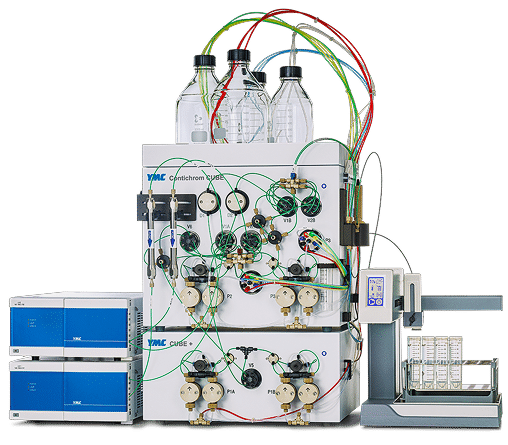
All Contichrom systems support twin-column continuous chromatography with RP (C18, C8, C4), IEX, and mixed-mode resins used in peptide purification (particle sizes ≥10 µm). Methods scale predictably from CUBE → PILOT 300X → TWIN HPLC.

Peptide Purification Applications

GLP-1 Receptor Agonists (Semaglutide, Tirzepatide, Liraglutide)

Long-chain peptides (30–39 aa) with complex impurity profiles. MCSGP enables high-yield RP-HPLC purification at the multi-hundred-kg scale demanded by the GLP-1 market — with up to 75% less solvent and proportional upstream synthesis savings.


Short Therapeutic Peptides (e.g., Glucagon, Icatibant, Octreotide)

MCSGP consistently outperforms optimized batch processes for peptides in the 10–30 aa range. Published data on glucagon showed +23% yield at identical purity, with a straightforward one-day method transfer from batch.


Multi-Step Peptide Purification (RP + IEX / RP + RP)

Some peptide purification methods benefit from combining orthogonal chromatographic steps when a single separation does not provide sufficient selectivity. ChromaCon supports automated multi-step workflows such as RP + IEX or RP + RP using 2D chromatography, while MCSGP can be applied to the throughput-limiting purification step.


Peptide Impurity Isolation & Characterization (N-Rich)

ICH-required peptide impurity characterization typically takes weeks of repetitive analytical runs. N-Rich automated on-column enrichment isolates milligram quantities of target peptide impurities up to 80× faster.

Getting Started with MCSGP Peptide Purification

See the Contichrom® platform in action before you commit, assess MCSGP suitability computationally or experimentally using your own peptide sequence and resin, develop your continuous method at lab scale on a Contichrom® CUBE, then scale to GMP production on the TWIN HPLC — the same platform behind Bachem’s first GMP-validated continuous peptide process.

See It First — Free Demo or Webinar

  • Not yet familiar with the Contichrom® platform? Start here. YMC ChromaCon offers no-charge demonstrations and introductory webinars tailored to your team.

    • On-site in Zurich (half day, 2–4 hours): see the CUBE in person, run ChromIQ® live, discuss your peptide purification challenge with YMC ChromaCon application scientists
    • Remote webinar (1–3 hours): interactive live session covering MCSGP, N-Rich®, ChromIQ® software, and the full Contichrom® ecosystem
    • Sessions cover MCSGP process design, the ChromIQ® MCSGP Wizard, and scale-up to PILOT 300X and TWIN HPLC

    → Request a free demo or introductory webinar

Modeling Assessment for Peptides

Predict how MCSGP will perform on your peptide sequence before running a single continuous experiment. YMC ChromaCon builds a calibrated mechanistic model from your existing batch RP data.

  • Submit your linear gradient batch chromatography runs with fraction collection and analytical purity data — from any HPLC or FPLC system, no Contichrom® required
  • YMC ChromaCon calibrates and validates the model, simulates MCSGP operating points, and delivers a predicted batch vs. MCSGP performance comparison (yield, purity, productivity) with initial scale-up parameters
  • AutoPeak® dynamic control impact is included in the simulation
  • Typical timeline: 3–5 weeks from receipt of data; no material shipment required

→ MCSGP Process Modeling Service

Experimental Feasibility Study — Your Peptide, Your Resin

Your peptide is purified on YMC ChromaCon’s Contichrom® platform at our facility in Zurich. We reproduce your batch RP method as a benchmark and run ≥ 3 MCSGP experiments side-by-side.

  • Ship starting material to Zurich — typically ≥ 20× a single preparative batch run, scaled to 1 cm i.D. columns
  • We reproduce your analytical HPLC method, establish the batch benchmark, and run MCSGP experiments using your resin and solvent system
  • Deliverable: side-by-side batch vs. MCSGP comparison with real chromatographic data from your peptide and resin, plus fractions for your independent purity verification
  • Typical timeline: 4–6 weeks after receipt of starting material and purchase order

→ YMC ChromaCon Feasibility Studies

Develop at Lab Scale — Rent or Purchase a CUBE

MCSGP method development is performed on the Contichrom® CUBE using your existing RP resin and solvent system. Available for rental or purchase.

  • ChromIQ® MCSGP Wizard builds the initial MCSGP operating point from your existing batch chromatogram — first continuous run typically achievable within a day
  • Your current batch gradient conditions are the starting point — no new resin or method development required
  • AutoPeak® dynamic process control adjusts collection windows in real-time via UV and conductivity, compensating for feed variability and column aging
  • The CUBE also supports N-Rich® for in-process impurity profiling alongside MCSGP development — both run on the same platform

→ Contichrom® CUBE Rental Program

Purchase a Contichrom® CUBE 

Scale to GMP Production — PILOT 300X or TWIN HPLC

The MCSGP method developed on the CUBE transfers directly to larger Contichrom® systems for pilot and manufacturing-scale production. YMC ChromaCon provides scale-up consulting and GMP documentation support.

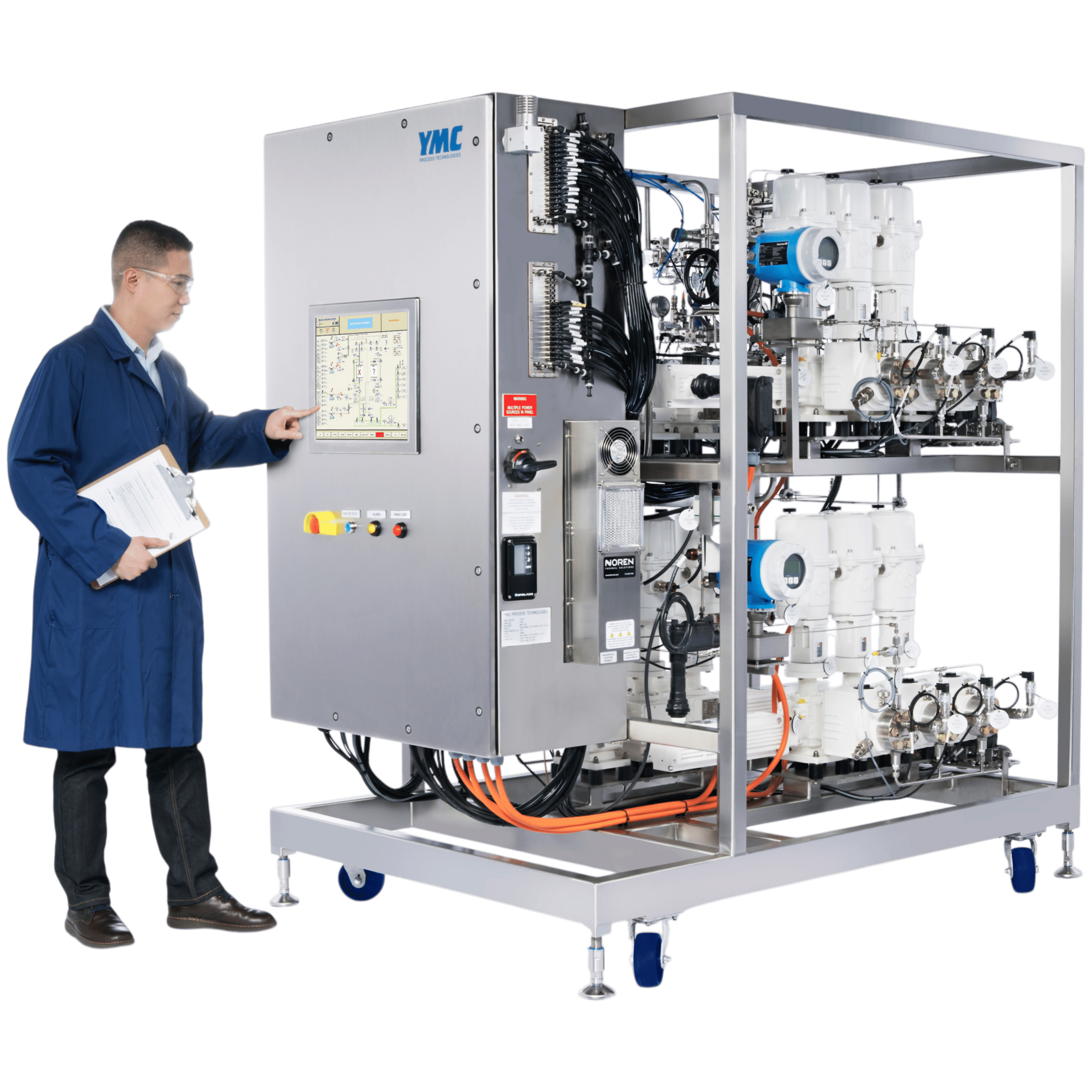
  • PILOT 300X (up to 300 mL/min, 100 bar, ATEX Zone 2) for pilot-scale and clinical supply batches
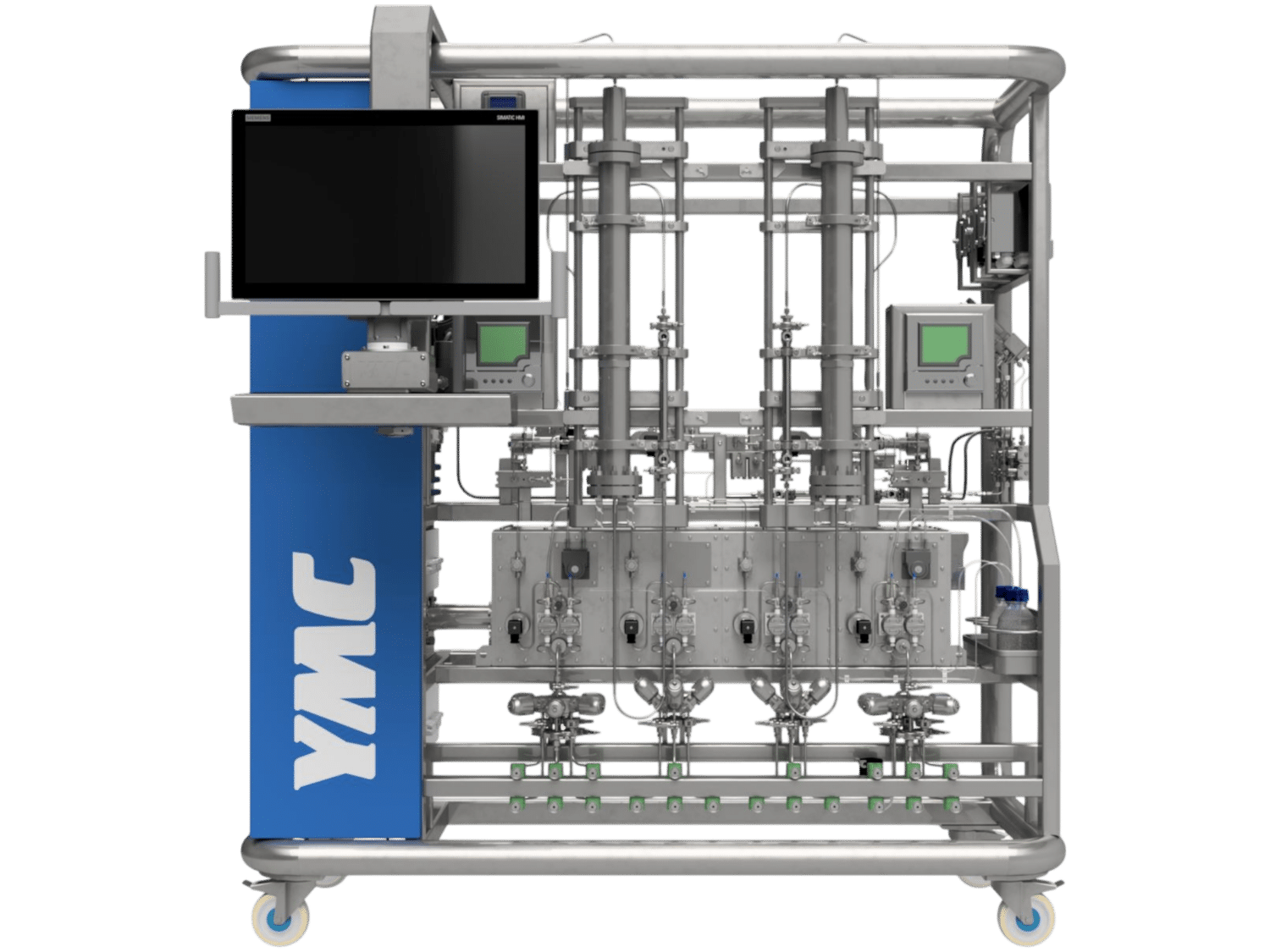
  • TWIN HPLC for GMP production — the same platform used for Bachem’s first GMP-validated continuous peptide purification process (2022)
  • Scale-up is driven by column diameter — bed height, gradient conditions, and AutoPeak® control logic are preserved across scales
  • Four TWIN HPLC system sizes cover lab through full production scale
  • GMP documentation support (IQ/OQ/PQ) and scale-up consulting available

→ Scale-Up Consulting and Training

Ready to Upgrade Your Peptide Purification Process?

Unlock This Resource

Fill in your details to receive the full content straight to your inbox.

Frequently Asked Questions About Peptide Purification